
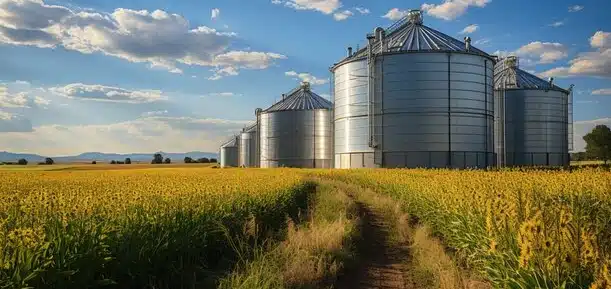
Managing seed inventory can seem like a very pressing or tricky component of agricultural business. This can be attributed to the fact that seed inventory involves quality-sensitive items whose lack of inventory can lead to delayed plantings or even generate financial losses due to expired seed inventory.
With the scale and complexity of agricultural activity increasing, keeping track of seed inventory using spreadsheet or manual systems becomes highly inaccurate. It is at this point that the importance of seed inventory systems and seed inventory software comes into play. These tools combined provide the much-needed systematic accuracy for seed inventory control over crop type, lots, inventory locations, and year.
This blog will tell you everything about the seed inventory system, how it’s defined and explained, along with its key components and implementation.
What is a Seed Inventory System?
A seed inventory system is the structured way an organisation manages seed stock across its lifecycle. It covers how seed quantities, varieties, batches, quality attributes, storage locations, and movements are recorded, tracked, and controlled.
In modern operations, this system is powered by seed inventory software, which ensures inventory data stays accurate as real-world activities occur. Software is not separate from the system, it is what makes the system enforceable and scalable.
The Difference between a Seed Inventory System and a Basic Inventory
Basic tools of inventory management are primarily concerned with total quantity. In a seed management system, one recognizes that:
- Seed lots cannot be interchanged,
- Quality changes over time,
- Storage conditions are important,
- The allocation should conform to planting/sales plans.
It is an important distinction as far as reliability is concerned.
Who Uses Seed Inventory Systems?
The systems are used by seed producers, seed distributors, seed cooperatives, agri-business companies, and large farming operations that deal with different seed types, storage locations, and seasonal demand patterns.
Importance of Seed Inventory Management in Agriculture
Seed inventory management plays an important role. Since seeds inventory problems come at the worst possible times like during the planting season, when there is no time to correct errors, a seed inventory software becomes a lifeline.
Effect on Planting and Yield Results
Inaccurate data on the inventory can result in delayed planting, the use of wrong seeds, or last-minute changes that will affect the output.
Cost, Wastage, and Working Capital Risk
Seeds can go bad or become obsolete as time goes by. As a result of the lack of visibility of ageing and usability information, organizations tend to buy too much “just in case.”
Regulation and Quality Compliance Pressure
Treated, certified, and/or regulated seeds must be traceable. It’s easier for farmers, seed companies, and governments to get into trouble with inventory management, here’s where they need a robust seed inventory system.
Key Features of an Effective Seed Inventory System
There should be an effective seed management system that involves various interlinked elements to ensure control and visibility within the seed processes.
Variety and Batches-Based Inventory Management
The seed stock has to be monitored by type, batch number, and location, not only by overall amounts. This allows organisations to know precisely which seed they have, where it is located, and whether it is suitable for planting.
Location-Wise Stock Visibility
Seed stocks can be kept in different locations or warehouses. This can help prevent unrequired movements and losses through abandonment or redundancy.
Ageing and Shelf-Life Monitoring
Seeds eventually expire, becoming non-viable. It becomes important to record the time seeds spend in storage, which helps teams decide which seeds to use first based on time and which need re-testing or disposal.
Quality, Treatment, and Certification Tracking
Batch traceability of germination data, treatments, and certification status is necessary to ensure that only qualified seeds are dispensed for planting or distribution.
Movement and transfer tracking
As seeds are transferred from an entity to another, all transactions are well documented in order to maintain traceability.
Allocation Based on Planting and Sales Plans
This is especially important for seed as it allows certain lots to be held against planting contracts in order to avoid allocation conflicts as well as shortages at the last minute.
How a Seed Inventory System Works
An efficient seed management system involves a continuous process, which monitors and records seed operations in real time as the actual seed operations process is performed. It does not use the traditional manual process, contrary to others that are updated periodically.
Step 1: Receipt of Seed and First Recording
The cycle includes the production of the seed or reception of the seed supply from outside sources. At this particular point, the seed system is expected to create critical information including variety, batch/lot number, weight, or volume, and the place of storing the seed or stock.
Step 2: Real-Time Inventory Updates During Operations
When the seeds are transported, processed, conditioned, or relocated from one storage location to another, the seed inventory system will automatically be updated. Every operation performed will generate its corresponding seed inventory activity.
This ensures there is no planning based on outdated information and teams thus have the up-to-date status of the availability of seeds at all times.
Step 3: Batch-Level Traceability and History Tracking
Every seed sample is marked as a separate entity with its timeline maintained accordingly. The details are also maintained about how long it was warehoused for, what processes it went through, where it was transferred to and from, and for what purposes it was allocated.
Step 4: Quality, Treatment, and Usability Evaluation
As an integral service, quality information like the outcome of the germination test, treatment status, or certification details can be assigned to the appropriate batches. This enables the teams to determine whether the particular batch of seeds can be used for planting or distribution, thereby avoiding the distribution of banned or below-standard seeds.
Step 5: Allocation to Planting or Sales Plans
Before seeds are distributed, this system enables certain lots to be allocated against certain schedules of plantings or sales commitments. This function is necessary before distribution so that a certain inventory is not committed a certain number of times before being distributed.
Step 6: Issue, Dispatch, and Final Movement
When seeds are allocated for planting or distributed, the inventory decreases accordingly, and the final movement captures the closing stock. This ensures that there are no inaccuracies in reporting the closing stock.
Step 7: Reconciliation and Ongoing Monitoring
Reconciliations on a regular basis compare physical inventory and system reports, so any discrepancies can be spotted and dealt with quickly. Results can also be checked and adjusted before any problems arise in terms of planning and subsequent operations.
Challenges associated with Manual Seed Inventories
Current seed inventory management practices using manual inventory systems such as spreadsheets, logging, and other independent applications are not equipped for modern agricultural operations. The more seeds, seed types, and geographical sites, the more risks these practices create.
Data Inconsistencies and Visibility Gaps
In cases where different teams keep their own records, there are chances that the inventory information may end up being unreliable. This may lead to formats not being standardised, and assumptions may end up being used in place of authenticity of the information.
Limited Insight into Usable Inventory
Manual systems usually record data for the quantity, and little data is provided for usability. Without the visibility of the batch, it becomes hard for those involved to distinguish between the storage of viable seeds, age-related seeds, treated seeds with usage limitations, or those that have outgrown their certification standards.
Managing Ageing and Shelf Life
Seeds are time-sensitive and their viability falls gradually and not all at once. Manual monitoring makes it difficult to track how long particular seed samples have been in storage and subsequent prioritized use. As such, organisations end up getting seed that is expired or compromised too late.
Poor traceability when items move
Seeds tend to move between storage centers, regional storage, distributors, and seed farms. In manual processes, this can be recorded in an unorganized manner or not recorded at all. Over time, traceability is interrupted, and it becomes impossible to explain where seed has traveled, who has dealings with it, and to whom it has been allocated.
High Risk During Peak Planting Periods
Inaccuracies in the inventory can be most detrimental at the time of planting. This is when decisions have to be taken hastily, and other options may not be as viable. In the case of manual inventory, the likelihood of something going wrong, like the discovery of a discrepancy, an error, or a problem in the quality, being noticed last minute can prove detrimental.
Heavy Operational and Administrative Burden
Manual record-keeping entails continuous reconciliation, follow-ups, and cleaning of the data. Activities such as updating spreadsheets, transfer reconciliations, and generating inventory reports take a lot of time and are prone to a high degree of errors.
Limited Audit and Compliance Readiness
With the use of files, emails, and registers to house inventory data, the process of preparing for an inspection or audit becomes frustrating. Since information has to be reconstructed manually, this increases the chances of inconsistencies and stress.
Scalability Constraints
What works in small quantities becomes unworkable under volume, variety, or location pressures. Manual seed accounting systems are processes that become both unscalable and costly as the size of the organization and number of seeds expand.
Best Practices for Implementing a Seed Inventory Management System
Implementing a seed inventory system successfully is as much about operational discipline as it is about technology. Organisations that focus only on deploying software without aligning processes, data ownership, and workflows often struggle to realise full value. The most effective implementations treat seed inventory as a core operational capability that must be governed, adopted, and continuously refined.
Standardize Seed Data & Processes
Consistency is the essence of a sound seed stock management system. There have to be clear guidelines laid down within the organization that govern exactly how varieties, lots, locations, and quality are to be entered. If such consistency is not maintained, several different teams within an organization might view or enter data in different ways.
It guarantees that there is a predictable flow of inventory, such as seed that is received, moved, treated, and issued, which makes reporting, reconciliation, and analysis much more accurate.
Digitise your inventory as early as possible.
Early digitization is imperative in ensuring continuity in seed inventory information. Recording seed information at the time of production or procurement ensures that a clean record trail is maintained throughout storage, transfer, and allocation. When digitization is done later, some gaps are created which are difficult to fill as seed is allocated and also used.
Early capture helps achieve a clearer understanding of aging, quality, and availability, which helps with planning well before the start of planting pressures.
Consolidate Inventory with Planning and Logistics
Seed inventory system provides the most useful information in relation to operational planning and logistics. Integrating an inventory system with the production and logistics plan as well as any contractual agreements guarantees an operational plan guided by the physical availability of the inventory and not estimates based on outdated information.
This integration helps reduce last-minute changes, avoids the double allocation of seed, and enhances coordination between the inventory teams, planners, and the logistics operators, especially when the time frame is critical for planting.
Defining Ownership and Use Rules
Even the most effective system will function only as well as the consistency with which that system is used. It must clearly state who the owner is regarding the recording of receipts, transfers, adjustments, and issues. Training the teams when and how to change the inventory will ensure that the data maintained remains accurate.
This decreases the need for manual verification and correction of errors if proper usage discipline is followed.
Review and Improve Continuously
Seed inventory management systems are never static. There would be an evolution of seed portfolios, seed volumes would expand, and seed regulations would change. The more seed inventory management systems are checked by an organisation, the more gaps would be identified in its data.
Continual improvement ensures the accuracy, relevance, and alignment to operational and expectation demands for the inventory management system.
Most Advanced Seed & Agricultural Inventory / Supply Chain Software Firms
1. Agrichain
Agrichain is an agricultural supply chain and inventory management system. It connects farmers, traders, farmers storage, and buyers in an integrated platform. The system allows real-time monitoring of seed and commodity inventories. It identifies stock with logistics and contracts. It offers traceability to businesses with multiple locations.
2. Cropin
Cropin is an agricultural technology firm that offers digital agricultural solutions for seed and crop production management, tracing, and quality systems. These solutions enable organisations to keep track of their seed lots and crop results.
3. Strinos
Strinos provides solutions for managing seed inventory and lots. The system provides lot-level insights and the facility for mobile data entry. The software is intended for companies operating within the seed industry and is focused on seed life cycle insight and operational reporting.
4. AGRIVI
AGRIVI provides a wide range of management functions for farms and enterprises. This includes management of inputs, seed stock management, and farm management. The applications are linked to manage inventory and crop planning.
5. SourceTrace
SourceTrace offers agri value chain and farm management solutions and products, including inventory and traceability functionality. It assists the organization in the management of movement and history related to batches and field operations.
6. AgTech
AgTech seed ERP solution offers inventory management tools, order management capabilities, and forecasting tools designed for seed distributors and seed exporters. It also provides tools for lot traceability and reporting and allows for visibility into multiple channels of inventory.
7. Primetics
The products offered by Primetics include seed inventory and processing solutions which involve inventory management, conditioning, and lots. The products are suitable for operations that involve seed production lines.
8. Unleashed
This provides capabilities such as real-time inventory management, batch management, and barcoding. Designed for general inventory management but suitable for agriculture.
9. Odoo
Odoo’s inventory system has support for batch or lot tracking, multiple locations, and barcode scanning. It is an excellent solution for seed and agricultural inventory management when combined with other farming or inventory applications.
10. Oracle NetSuite ERP
Oracle NetSuite ERP offers world-class inventory management as well as lot management capabilities with finance, planning, and supply chain integration. Though wide-ranging, it has been employed by major agribusinesses in managing seed inventory in accordance with larger business processes.
Conclusion
Seed inventory management systems, which are backed by effective seed inventory management software, have now become the imperative of today’s agriculture. This is because such systems enable effective control over the management of the seed inventory.
By integrating seed inventory with storage functions, logistics, and planning, it helps reduce risks and losses and also allows organisations to make effective decisions right from the first point of the agricultural supply chain.
FAQS
What is the best software for inventory?
The most suitable inventory management software varies according to industry and level of operations. Agricultural and seed-related business inventory management software must include functionality for batch and location management and traceability. Agricultural industry-specific inventory management software such as Agrichain exists; general-purpose ERPs are highly complex and difficult to adapt for seed-related activities.
What is seed inventory?
Seed inventory is the process of monitoring and controlling seed stock throughout its life cycle, with respect to quantities, types, batches, storage points, age, and quality. Seed inventory, being different from regular inventory, has to consider parameters such as shelf life, germination life, treatment restrictions, and government regulations.
What software is used in agriculture?
Agriculture uses a range of software depending on the function, including:
- farm management software for planning and field operations,
- inventory and supply chain software for managing inputs like seed,
- traceability and compliance systems for regulated crops and markets.
Modern agricultural enterprises often use integrated platforms that connect inventory, storage, logistics, and contracts rather than isolated tools.