In this article, we dive deeper into grain commodity trading and answer the questions that matter most to anyone operating in this space.
- What is grain commodity trading?
- How old it is, how big has it grown, and why managing it well requires more than a spreadsheet?
- What is grain position reporting?
- What are the benefits of getting both right?
Whether you are a grain trader, an elevator operator, or a grower, there’s one thing that’s common.
Clarity.
You need clarity over what you own, what you owe, what has been traded, and what still needs to move.
This article is built around that, because it is what separates a well-run grain operation from one that is constantly reacting.
What Is Grain Commodity Trading?
Let us start with the basics.
A grain commodity is any grain crop that is bought and sold in standardised units based on type, grade, and quality.
Wheat, corn, barley, canola, sorghum, and oats are all grain commodities. They are interchangeable within their grade specifications, which is what makes them tradeable at scale across global markets.
Grain commodity trading is the buying and selling of these grains, either for immediate delivery or for delivery at a future date, between the many participants who make up the supply chain.
It is one of the oldest and most complex forms of commerce in the world.
Why is it one of the oldest?
Grain commodity trading has been there since before the industrial revolution. Grain markets were already operating in formal, organised ways in the early 1800s.
The Chicago Board of Trade, one of the world’s first commodity exchanges, was established in 1848. Before that, grain had been traded across regions and borders for centuries, because food has always needed to move from where it is produced to where it is consumed.
Why is it one of the most complex?
Grain commodity trading involves a sheer number of stakeholders, the variability of quality and grade across harvests and regions, the logistics of moving bulk commodities across long distances, and the seasonality of production that creates natural pressure points in the supply chain every year.
A single tonne of wheat can pass through a grower, a broker, a trader, an elevator, a carrier, a port, and a processor before it becomes flour. Each of those handoffs involves a contract, a price, a timing obligation, and a record.
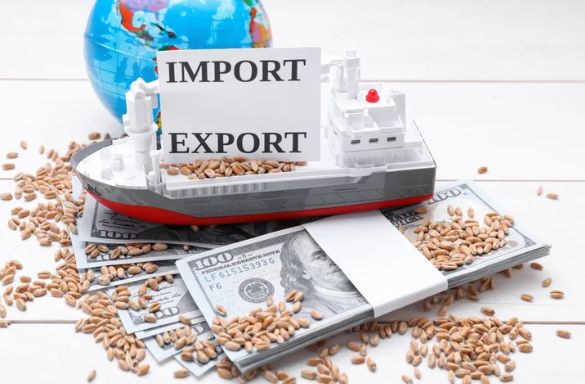
From wheat fields in Western Australia to corn silos in the American Midwest, billions of tonnes of grain change hands every year across a web of growers, traders, elevators, processors, and exporters.
The Scale of Global Grain Markets
Here is where the numbers tell a story worth understanding.
Global grain trade has grown exponentially from 1921 reaching an estimated 576 million tonnes in 2021. Stefan Vogel, General Manager at RaboResearch, puts it plainly: “We have had strong growth in trade, particularly for the last 20 years. That trend will continue because production of all crops is increasing in regions that have land but not the most population.”(1)
- By 2023/24, the worldwide trade of grains and oilseeds had reached approximately 880 million metric tonnes, with a value of around $330 billion. (2)
- Global grains and oilseeds trade grew at a 7% CAGR over the decade to 2023/24, reaching approximately 880 million metric tonnes valued at $330 billion. In two decades since Rabobank first mapped the market in 2003, the scale, speed, and complexity of grain commodity trading has transformed entirely.(3)
- The global grain farming market is projected to reach $1,753.75 billion by 2030, growing at a CAGR of 7.4%. (4)
- Digital platforms alone facilitated grain trading worth 940 million metric tonnes online in 2024.(5)
What this means in practice?
The volume of grain being traded has grown enormously over decades. The value at stake has grown with it. The number of participants, contracts, delivery commitments, and pricing structures involved has multiplied. And the speed at which markets move has accelerated with the rise of digital trading platforms.
The market has grown too large, too fast, and too complex for manual tools to keep up. Spreadsheets were not built for this scale. Disconnected systems were not built for this speed. And phone calls and email chains were never going to provide the clarity that a modern grain trading operation needs to function well.
In Australia, the picture is tightening. According to the latest ABARES outlook, the gross value of wheat production is forecast to fall by 13% to $9.5 billion in 2026/27, with the value of exports also falling 13% to $8.6 billion.(6) High global carry in stocks is expected to place downward pressure on wheat prices, and production itself is forecast to fall due to reduced area planted and lower yields. That combination of falling production, falling export value, and compressed pricing means the margin for error in trading decisions is getting smaller, not larger.
In an environment like this, grain businesses cannot afford to be operating without clarity over their positions.
Who Are You and What Do You Need?
Grain commodity trading involves several distinct types of participants. Each one has a different role in the supply chain and a different version of the clarity problem.
If you are a grain trader or merchandiser, you need clarity over your long and short positions across every commodity and grade you are managing, your purchase contracts with growers and your forward sales with buyers, and how your net exposure changes across future delivery periods. You are making buy and sell decisions every day based on that picture. If the picture is incomplete or out of date, the decisions you make on the back of it carry risk you may not even be aware of.
If you are a grain elevator or bulk handling company, you need clarity over the grain stored at your sites, the deliveries coming in from growers, and the dispatch commitments going out to buyers. You are managing stock that belongs to multiple owners, across multiple sites, against multiple delivery obligations. Without clear visibility over all of it in one place, the risk of understocking, overstocking, or missing a commitment is constant.
If you are a grower, you need clarity over how much grain you have committed to sell against your expected and actual production, what you have already traded and what is still available, and how your forward selling decisions today will affect your position through the rest of the season. Overcommitting is one of the most costly mistakes a grower can make. So is underselling when the price is right.
One thing is clear. The grain commodity trading chain only works well when everyone in it has an accurate, current understanding of where they stand.
What Is Grain Position Reporting and How Does It Provide That Clarity?
Grain position reporting is the process of tracking and presenting the net position of a grain trading operation at any point in time. It brings together physical stock on hand, purchase contracts, forward sales commitments, and financial exposures into a single consolidated view.
A net long position means the operation holds more grain than it has committed to sell.
A net short position means it has committed to deliver more than it currently owns or has secured.
Both positions carry risk. Both require management, and neither can be managed well without visibility.
For decades, most grain businesses produced their position report manually. A trader or operations manager would pull data from various sources, build or update a spreadsheet, reconcile the figures, and circulate a report. In a small operation, that process might take an hour. In a larger one managing multiple commodities, grades, sites, and delivery periods, it could consume most of a working morning.
And by the time it was finished, the data was already stale.
That is not clarity. That is a delayed, manually produced approximation of where a business stood several hours ago. In a market moving at the speed grain markets move, decisions made on that basis carry real commercial risk.
The Shift to Digital Grain Position Reporting
The grain industry is moving toward digital position reporting tools that eliminate the manual process and replace it with a live, continuously updated view of net exposure.
The core capabilities that define a modern grain position reporting system include a real-time dashboard consolidating physical stock, purchase contracts, and sales obligations; automatic net position calculation by commodity, grade, and pricing type; forward position planning across future delivery months; multi-dimensional filtering to interrogate position data from multiple angles; and seamless integration with existing contract and inventory systems to eliminate double entry.
When these capabilities are in place, the position report is no longer something that gets produced once a day and shared around. It is a live tool that every relevant team member can access at any moment, with confidence that what they are seeing is accurate and current.
THAT is clarity, and it is what allows the trading decisions, the storage decisions, and the selling decisions made across the supply chain to be made well.
The Benefits for Each Participant
For grain traders and merchandisers, digital position reporting means faster and more confident buy and sell decisions. It means identifying a short position early enough to cover it at a reasonable price. It means knowing your net exposure across every commodity and grade without spending hours on reconciliation. And it means having a forward view of how your position evolves across coming months so you can plan ahead rather than react.
For elevator operators and bulk handlers, it means visibility over stock, purchases, and sales commitments across every site in real time. It means better coordination between procurement, storage, and dispatch teams. It means the operational and financial cost of understocking or overstocking is substantially reduced because the information needed to avoid it is always available.
For growers, it means being able to plan forward selling decisions with confidence. It means knowing exactly how much has been committed against expected and actual production before signing the next contract. It means reducing reliance on manual tools that are slow, disconnected, and prone to error.
In each case, the benefit is the same, clarity!
AgriChain Position Reporting
AgriChain’s Position Reporting feature is built to deliver exactly this clarity for traders, elevators, and growers operating in the grain commodity trading supply chain.
It brings together physical positions, financial positions, purchase contracts, sales obligations, and forward delivery timelines into a single real-time dashboard. Positions automatically sync from existing AgriChain contracts and stocks, eliminating double entry and ensuring the view is always current.
Traders can see their true exposure by combining physical and financial positions, identify short and surplus positions early, and make faster buy and sell decisions with real-time forward-looking visibility. Elevator operators can track stock, purchases, and sales commitments across sites, improve coordination between procurement and dispatch, and monitor delivery timelines to ensure commitments are met. Growers can track committed sales against expected and available production, understand their forward position, and avoid overcommitting by maintaining clear visibility of obligations.
One platform. One source of truth. The clarity every participant in grain commodity trading needs.
Want to see it in action? Request a demo and we will show you how it works for your specific operation.
Conclusion
Grain commodity trading is one of the oldest industries in the world and one of the most complex. It has grown exponentially over the past century, and the scale, speed, and competitiveness of modern grain markets have made the clarity problem more urgent than ever.
Traders need clarity over their positions. Elevators need clarity over their stock and commitments. Growers need clarity over what they have sold and what they still have available. And all of them need that clarity in real time, not at the end of a manual reconciliation process that is already out of date by the time it is finished.
Grain position reporting is the answer to that clarity problem, and digital tools that deliver it in real time are what the industry is moving toward.
References
- World Grain, A Century of Grain Trade
- RaboResearch via Feed and Grain, Global Grains and Oilseeds Trade Reaches 880 Million Metric Tons in 2023/24
- Rabobank via World Grain, Global Grains and Oilseeds Trade Continues to Grow, June 2025
- The Business Research Company, Grain Farming Global Market Report 2030
- Market Growth Reports, Digital Platforms and Online Grain Trading Volume 2024
- ABARES, Agricultural Commodity Outlook 2026/27
Frequently Asked Questions (FAQs)
What is grain commodity trading?
Grain commodity trading is the buying and selling of standardized grain crops such as wheat, corn, barley, and canola between growers, traders, elevators, processors, and exporters. It involves physical trading of actual grain as well as financial trading through forward contracts and pricing instruments, and has been a formal commercial activity since the early 1800s.
What is grain position reporting and why does it matter?
Grain position reporting is the process of tracking a grain trading operation’s net position at any point in time by combining physical stock, purchase contracts, and forward sales into a single view. It matters because accurate, current position data is the foundation for every commercial decision made in a grain trading operation, from buying and selling to storage planning and delivery coordination.
What is a net grain position and how is it calculated?
A net grain position is the difference between the grain a business owns or has contracted to buy and the grain it has committed to deliver or sell. A positive net position means the business is long, holding more grain than it has sold forward. A negative position means it is short, with more delivery obligations than grain secured.
What is the difference between a short position and a surplus/long position in grain trading?
A short position means a trading operation has committed to deliver more grain than it currently owns or has on order, creating supply risk that requires proactive management. A surplus or long position means the operation holds more grain than it has sold, which creates an opportunity to sell but also carries price risk and storage cost if held too long.
What is forward position planning in grain trading?
Forward position planning involves projecting how a grain trading operation’s net position will evolve across future delivery months based on current contracts, purchases, and inventory. It allows businesses to identify coverage gaps and delivery pressure points well in advance, enabling proactive rather than reactive decision-making.
What should grain position reporting software include?
Grain position reporting software should include a real-time dashboard consolidating stock, purchases, and sales; automatic net position calculation by commodity, grade, and pricing type; forward position planning tools across delivery months; multi-dimensional filtering capabilities; and seamless integration with existing contract and inventory systems to eliminate manual data entry and reconciliation.