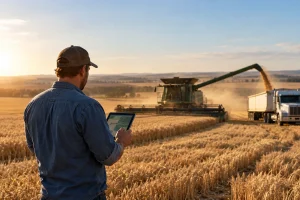
Most of the pressure in grain farming lands on the harvest itself. Timing it right. Hitting the yield target. Beating the weather before it turns.
But here’s what often gets missed: a lot of value gets lost after the grain is already sitting in the bin.
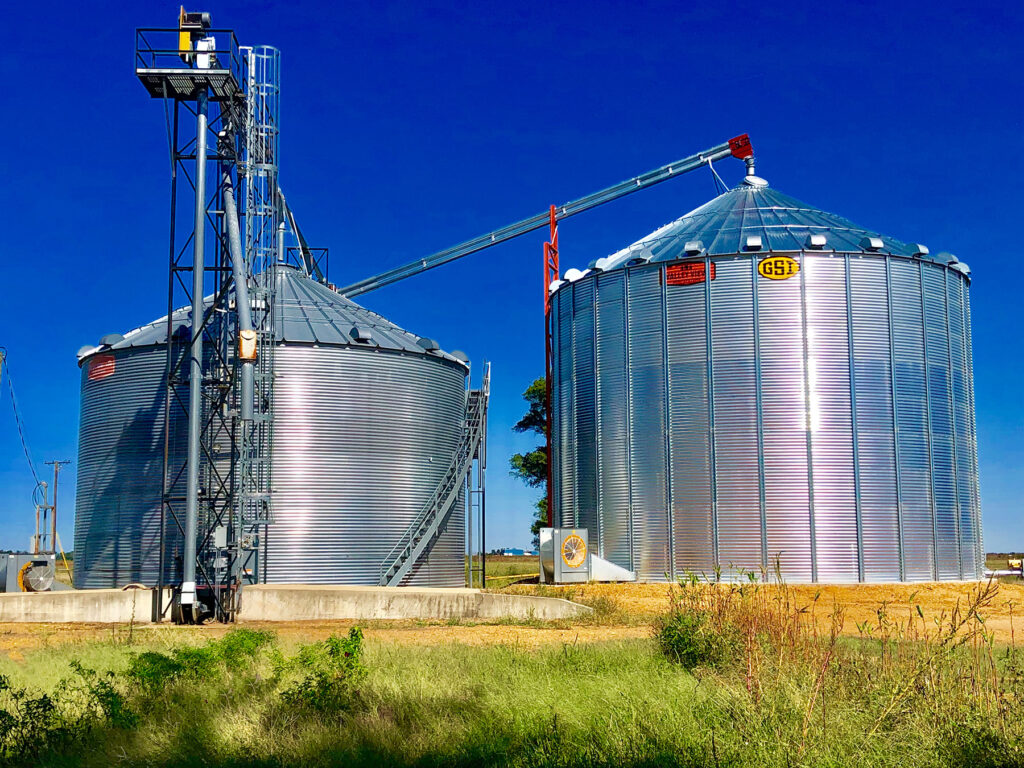
Stored grain isn’t inert. It breathes. It releases heat. It reacts to moisture in ways most people never see happening. Left unmonitored, that quiet process can turn a strong harvest into a downgraded one. In worse cases, it can turn a saleable crop into one that can’t be sold at all.
A grain management system exists to catch that shift before it becomes a loss.
What a Grain Management System Actually Does
At its core, a grain management system monitors and controls the conditions that decide whether stored grain holds its value or loses it. That means tracking temperature, moisture, and pest activity in real time, then giving you the tools to act the moment something starts to shift.
This is different from simply knowing how much grain you have sitting in storage. A stock count tells you quantity. A grain management system tells you condition, bin by bin, in real time, not after a problem has already set in.
That distinction matters more than most farmers realize until they’ve lived through a spoiled load.
Why Storage Conditions Matter More Than You’d Expect
Poor storage doesn’t just risk a lower grade. It risks health, safety, and profit, often all at once.
Quality deterioration happens fast.
After harvest, grain keeps respiring. That process shifts temperature and moisture in ways that quietly degrade quality while nobody’s watching. By the time the change is visible to the eye, the damage is usually already done.
Spoilage costs add up quickly.
Poor conditions lead to lower market value, pest infestation, and in the worst cases, total loss of a bin. A system that tracks storage conditions alongside market prices and inventory levels lets you catch problems while they’re still cheap and easy to fix, not after they’ve spread through an entire silo.
Contamination is a genuine health risk.
When grain isn’t stored properly, fungi and mould can develop. These produce toxins that put both animal and human health at risk. Monitoring conditions and controlling pests is what keeps that risk from ever becoming reality on your operation.
The Hidden Cost of Manual Monitoring
Here’s the part most grain operations don’t talk about enough: manual monitoring isn’t just slower. It’s riskier.
Walking bins on a schedule means you’re only ever checking conditions at fixed points in time. A hot spot can develop, spread, and cause real damage between two scheduled checks, and you won’t know until you’re standing in front of it. By then, you’re managing a loss instead of preventing one.
This is exactly the gap a connected grain management system closes. Instead of checking conditions periodically, you’re watching them continuously, and getting alerted the moment something moves outside a safe range.
The Core Components That Make It Work
Temperature and moisture monitoring.
This is the foundation everything else builds on. Digital sensors placed across your bins track conditions continuously, flagging early warning signs, like a developing hot spot, before they become a real problem. Since spoiling grain releases heat, water, and carbon dioxide as it degrades, catching that shift early is often the difference between a manageable issue and a lost load.
Automated aeration control.
Aeration pushes air through stored grain to manage temperature and humidity, but timing is everything. Smart systems use live sensor data to run fans only when conditions are actually right. That protects grain quality while cutting the energy costs that come from running fans on a fixed schedule instead of an informed one.
Remote monitoring and control.
You shouldn’t have to stand next to a bin to know what’s happening inside it. Remote access lets you check conditions and respond to problems from anywhere, which matters most when timing is tight and a delayed response could mean a bigger loss than it needed to be.
What to Look For in a Grain Management System
Not every system on the market does this well. A few features are worth prioritizing before you commit to one.
Traceability from storage through delivery.You want visibility into grain condition, location, and quality at every stage, not just while it’s sitting in the bin waiting to move.
Alerts, not just raw data. Sensor readings aren’t useful if nobody’s actively watching them. Look for systems that flag issues proactively, so you find out about a problem the moment it starts, not days later when you happen to check.
Scalability that grows with you. Whether you’re managing one storage site or several across different regions, the system should grow with your operation instead of becoming something you outgrow within a couple of seasons.
Integration with the rest of your operation. The best systems connect storage data with your broader supply chain, contracts, inventory, and logistics, so you’re not managing grain quality in one tool and everything else in another.
Protecting Grain Value Starts Before It Becomes a Problem
The businesses that get the most out of their harvest aren’t always the ones with the biggest yield. They’re the ones who protect what they’ve already grown, by catching quality issues while they’re still small and inexpensive to fix.
That’s the real value of a grain management system. Not just visibility for its own sake, but the ability to act before spoilage, pests, or contamination turn a good harvest into a costly one.
If you’re still relying on manual bin checks and a notebook to track storage conditions, the gap between where you are now and where you could be isn’t small. It’s the difference between catching a problem in its first hour and discovering it three weeks later, once it’s already spread.
AgriChain’s platform brings storage monitoring, inventory tracking, and supply chain visibility into one connected system, so your team spends less time walking bins and more time making decisions that protect your bottom line.
See how it works. Book a free demo and find out what better visibility could do for your storage operation this season.
Grain Management System FAQs
What is a grain handling system?
A grain handling system moves and stores harvested grain safely, using equipment like conveyors, elevators, and dryers to transport, clean, dry, and store grain while reducing damage or loss.
How is a grain management system different from grain inventory software?
A grain management system focuses on protecting grain quality and condition during storage, tracking temperature, moisture, and pest activity. Grain inventory software focuses more on tracking stock levels, loads, and records across your operation. Many businesses use both together.
What causes grain spoilage in storage?
Grain spoilage usually comes from unmanaged temperature and moisture buildup, which allows fungi, mold, and pests to develop. Continuous monitoring is what catches these conditions early enough to prevent real damage.
Can a grain management system reduce storage costs?
Yes. Automated aeration control alone reduces unnecessary fan runtime, cutting energy costs, while early detection of quality issues prevents the larger financial losses that come from spoiled or downgraded grain.