Grain merchandising is a precision business.
Every day, traders and merchandisers make buy and sell decisions by asking themselves:
Where do we stand right now?
How much grain do we own?
How much have we committed to deliver?
And what is our net exposure across every commodity and grade we are managing?
For decades, the answer lived in a spreadsheet.
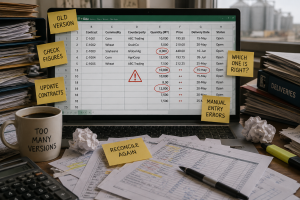
Traders would manually pull data from contracts, inventory records, and pricing sheets, stitch it together, and produce what the industry calls a Daily Position Report, or DPR. The process was time-consuming and error-prone. And by the time it was finished, the data was already out of date.
DPR software changes that.
It automates the entire process, pulling live data from contracts, stocks, and sales into a single consolidated view that updates in real time. For grain merchandisers managing large volumes and complex multi-commodity books, it is one of the most commercially important tools in their operation.
This guide explains what a Daily Position Report is, how DPR software works, and why the shift from manual reporting to automated DPR tools is accelerating across the grain industry.
What Is a Daily Position Report in Grain Merchandising?
A Daily Position Report is a consolidated summary of a grain trading operation’s current position. It brings together every relevant data point that affects where a merchandiser stands at any given moment. This includes physical grain on hand, purchase contracts not yet delivered, forward sales commitments, pricing exposures, and in some cases financial hedging positions.
The purpose of a DPR is to give traders and operations teams a single, accurate answer to the question of net exposure. A long position means the business holds more grain than it has committed to sell. A short position means it has committed to deliver more grain than it owns or has secured through purchases. Both positions carry risk, and both require action. The DPR is the tool that makes those positions visible.
In traditional grain merchandising operations, the DPR was produced manually each morning. A trader or operations manager would open their spreadsheet, update figures from the prior day’s trading activity, reconcile any discrepancies, and then circulate the report to the relevant stakeholders. In a small operation managing a single commodity, this process might take thirty minutes. However, in a larger operation managing multiple commodities, grades, pricing types, and delivery periods across multiple sites, it could consume several hours of the trading day.
The problem is not just time. Manual DPRs are only as accurate as the last update. If a contract is signed after the morning report, the position is already wrong. If a data entry error occurs during reconciliation, the entire decision-making process for that day is built on flawed information.
The Scale of the Problem
The cost of getting the daily position wrong is not theoretical. As commodity trading software provider Gen10 puts it: “The single most expensive event for a trader is when the positions do not reconcile, and you find out only when your mark-to-market goes against you. At that time, it is too late, stressful, and challenging to find out what happened and how it could have been corrected. Time is wasted both on manual data entry and on catching the errors that this inevitably generates.”(1)
That is the reality of manual DPR production for grain merchandisers. They manage active books across multiple commodities, grades, and delivery periods. The position report is only as good as the last manual update. And in a market that moves continuously, a report produced this morning is already carrying yesterday’s risk.
In Australia alone, grain growers produced 62.5 million tonnes of grain in the 2024/25 season, achieving $26 billion in gross value of production.(2) The merchandisers, traders, and bulk handlers moving that grain through the supply chain manage enormous volumes of contracts, commitments, and pricing exposures every day. Without accurate position data updated in real time, the commercial risk embedded in those operations compounds quietly until it becomes impossible to ignore.
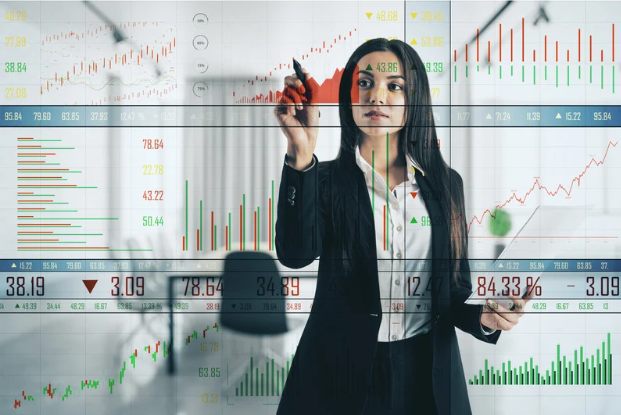
The shift toward digital tools is well underway. Approximately 72% of CTRM users in 2024 preferred real-time dashboards for risk position visualisation.(3) In the United States, over 68% of commodity traders have implemented or upgraded to digital trading and risk management platforms. More than half of them report improved trading visibility and risk mitigation as a direct result.(4)
For grain merchandisers still producing their DPR manually, the question is no longer whether digital position reporting is worth it. It is how much the manual process is costing them every single day.
What Is DPR Software?
DPR software is a digital tool that automates the production and maintenance of a grain trading operation’s daily position report. Rather than requiring a trader to manually compile data from multiple sources each morning, DPR software connects directly to the systems where that data lives. It then pulls everything into a live, continuously updated position view.
In a modern grain merchandising context, DPR software typically consolidates the following data streams into a single dashboard:
- Physical grain inventory across all storage locations
- Purchase contracts and their delivery schedules
- Forward sales contracts and outstanding commitments
- Pricing positions including flat price, basis, and grade differentials
- Net position calculations that automatically flag long and short exposure by commodity, grade, and delivery period
The output is not a static report produced once a day. It is a live position that updates as trading activity occurs. When a new purchase contract is entered, the position updates immediately. When a delivery is completed and inventory is reduced, the position reflects that in real time. As a result, the merchandiser’s position is always current, without anyone having to manually rebuild the report.
How DPR Software Works in Practice
The practical workflow for a grain merchandiser using DPR software looks very different from a manual reporting process.
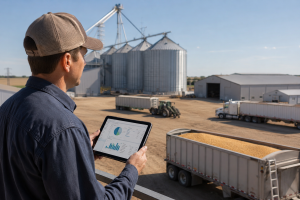
At the start of the trading day, the merchandiser opens their DPR dashboard. They immediately see their current net position across every commodity and grade they are managing. Long positions are visible. Short positions are flagged. Forward delivery periods are laid out so the merchandiser can see not just where they stand today, but also where they will stand in coming weeks and months if current contracts play out as planned.
Throughout the day, as contracts are executed, deliveries are confirmed, and inventory movements are recorded, the position updates automatically. Because the data is always current, the merchandiser can make decisions with confidence.
At the end of the trading day, reporting to management or stakeholders does not require a manual compilation exercise. The position is already documented, accurate, and available.
For operations managing grain across multiple sites, multiple commodities, and multiple pricing structures, this represents a significant operational improvement. The hours previously spent on manual DPR production are redirected toward actual trading activity. The risk of errors that distort the position view drops substantially. And the speed at which the business can respond to market movements improves because the information needed to act is always available.
DPR Software and Forward Position Planning
One of the most commercially valuable capabilities in modern DPR software is forward position planning. A standard daily position report tells a merchandiser where they stand today. A forward position view, however, tells them where they will stand across future delivery months based on their current contract book.
This matters because grain merchandising risk is rarely confined to the present moment. For example, a merchandiser might be perfectly balanced today but significantly short in two months’ time. This happens when a cluster of forward sales contracts approaches delivery without sufficient purchase coverage behind them. Without a forward position view, that risk stays invisible until it becomes urgent.
DPR software with forward position planning allows merchandisers to spread purchases, sales, and stock across future delivery periods. They can then visualise how their position evolves over time. As a result, timing gaps that could impact fulfilment or pricing are identified early, when there is still time to act without incurring unnecessary cost.
Who Uses DPR Software in Grain Merchandising?
DPR software is primarily used by grain traders and merchandisers who manage active books of purchase and sales contracts across one or more commodities. It is equally relevant for grain elevator operators and bulk handling companies managing stock, commitments, and deliveries across a network of sites. Large-scale growers who actively market their grain and manage forward sales obligations also benefit from position visibility tools, though their requirements are typically less complex than those of a dedicated trading operation.
In each case, the core need is the same: an accurate, current view of net exposure that can be trusted to support commercial decision-making.
Why Grain Merchandisers Are Moving Away from Manual DPRs
The limitations of manual daily position reporting become more acute as trading operations grow in scale and complexity. More commodities, more grades, more counterparties, more delivery periods, and more pricing structures all add to the reconciliation burden. They also increase the risk that a manual report contains errors or omissions.
Beyond accuracy and efficiency, there is also a speed argument. Grain markets move quickly. Pricing windows open and close. Supply and demand conditions shift. A merchandiser who can see their position in real time and act on it immediately has a material advantage over one who is working from a report that was accurate six hours ago.
The grain industry’s broader shift toward digital operations is reinforcing this trend. More contracts are now executed digitally, more inventory is tracked in real-time systems, and more logistics are managed through connected platforms. Therefore, the manual DPR becomes an increasingly outdated step in an otherwise automated workflow.
DPR software removes that bottleneck. It connects the position report to the systems that generate the underlying data, and it keeps that report current without requiring human intervention.
Conclusion
A Daily Position Report is one of the most important documents a grain merchandiser produces. It is the foundation for every buy and sell decision made during the trading day, and its accuracy directly affects the quality of those decisions and the margin outcomes they produce.
DPR software automates the production of that report, removes the manual reconciliation burden, and ensures the position view is always current. For grain merchandising operations managing meaningful volume across multiple commodities and delivery periods, it is a tool that directly supports better commercial decisions and more disciplined risk management.
As digital adoption accelerates across the grain industry, the manual DPR is increasingly being replaced by real-time position management tools. These tools give merchandisers the visibility they need to trade with confidence.
Sources
- Gen10, Experience Real-Time Reconciliation with CommOS
- Grains Australia, Australian Grain Industry Overview 2024/25
- Market Reports World, Commodities Trading and Risk Management Software Market Size, Growth Report 2033
- Global Growth Insights, CTRM Software Market Size and Share Report 2033
Frequently Asked Questions (FAQs)
What does DPR stand for in grain merchandising?
DPR stands for Daily Position Report. It is a consolidated summary of a grain trading operation’s current position, bringing together physical stock, purchase contracts, forward sales commitments, and pricing exposures into a single view. It reflects the operation’s net long or short position across the commodities it manages.
What is DPR software?
DPR software is a digital tool that automates the production and maintenance of a grain merchandiser’s daily position report. Rather than manually compiling data from multiple sources, DPR software connects to live contract, inventory, and pricing data. It produces a continuously updated position view without requiring manual reconciliation.
How is a Daily Position Report used in grain trading?
A Daily Position Report is used by grain traders and merchandisers to understand their net exposure at any point in time. It shows what grain they own, what they have committed to deliver, and where they are long or short across different commodities, grades, and delivery periods. This information drives buy and sell decisions throughout the trading day.
What is the difference between a manual DPR and DPR software?
A manual DPR requires a trader or operations team member to compile data from multiple sources each day. This process is time-consuming and subject to data entry errors. DPR software automates this by pulling live data directly from contract and inventory systems. It produces a position view that updates in real time as trading activity occurs.
What is forward position planning in DPR software?
Forward position planning is a feature in DPR software that projects how a trading operation’s position will evolve across future delivery months based on current contracts and inventory. It allows merchandisers to identify timing gaps and coverage shortfalls before they become urgent, supporting more proactive risk management.
What types of grain businesses use DPR software?
DPR software is used primarily by grain traders and merchandisers, grain elevator operators and bulk handling companies, and large-scale growers who actively market their grain. Any operation managing a meaningful book of purchase and sales contracts across multiple commodities and delivery periods can benefit from automated daily position reporting.